
- Six-Packthe familiar name for the OUPV
- Under 100 GRTfor an uninspected passenger vessel
- Up to 6passengers for hire
- 2 rule setsInternational and Inland Navigation Rules
- Region Bthe United States buoyage system
The starting pointWhat the USCG OUPV is, in plain English
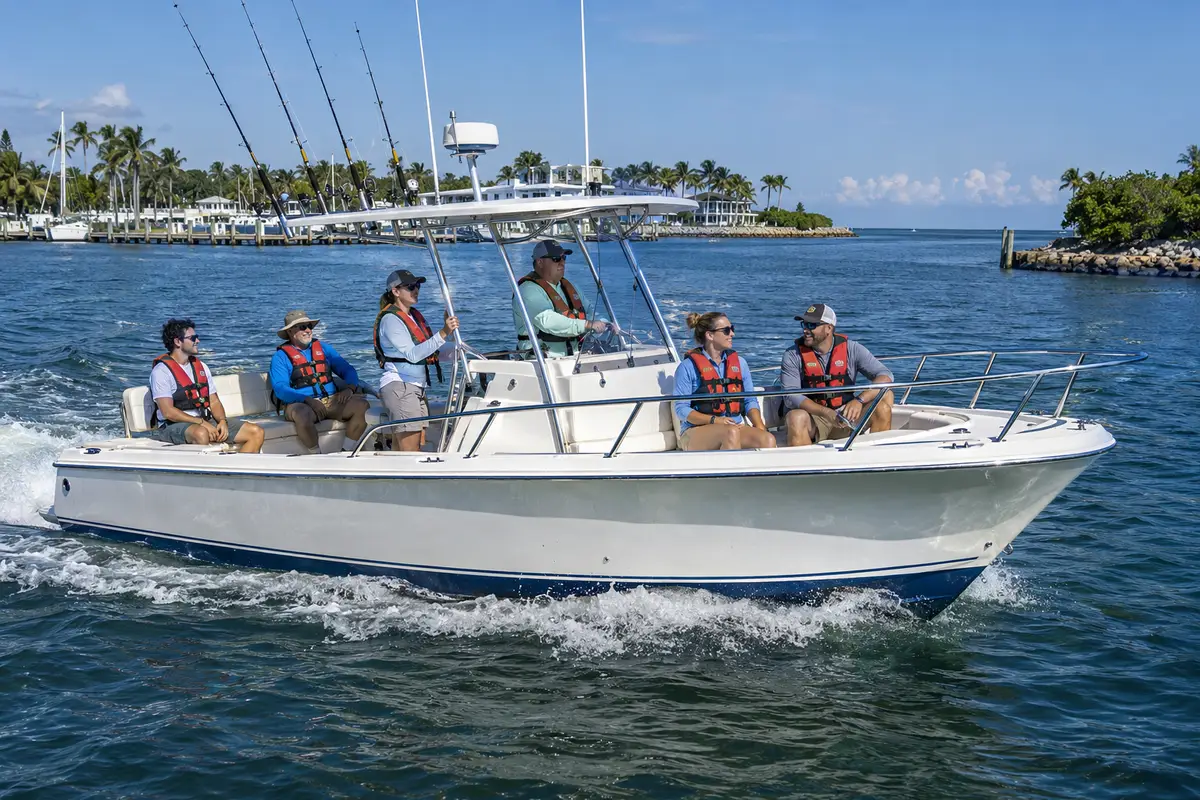
The OUPV is the USCG's entry-level officer endorsement on a Merchant Mariner Credential. It is aimed at candidates who want to carry no more than six passengers for hire on an uninspected passenger vessel of less than 100 GRT. The route and limitations of the endorsement still matter, so the credential is not a one-size-fits-all ticket.
Your operating envelopeWhat you can do, and where the line is
Think of the OUPV as a professional starting point for a very specific passenger operation, rather than a general recreational boating card. It covers the vessel and passenger description in the endorsement, within its route and limitations. That last phrase is worth reading slowly: it is part of the job, not fine print.
With an OUPV, you can
- Seek an officer endorsement on a Merchant Mariner Credential
- Operate an uninspected passenger vessel of less than 100 GRT
- Carry no more than six passengers for hire, within the route and limitations of the endorsement
The boundaries to keep in view
- Do not carry more than six passengers for hire under this endorsement
- Do not treat a vessel of 100 GRT or more as within this description
- Do not work outside the route and limitations of the endorsement
A practical study planHow to prepare for the OUPV
- Start with the operation you want to run
Keep the target clear: the OUPV is for an uninspected passenger vessel of less than 100 GRT carrying no more than six passengers for hire, within the endorsement's route and limitations.
- Master both Navigation Rules
Build equal confidence in the full International and Inland Navigation Rules. The OUPV tests both, so one rule set cannot be an afterthought.
- Work through the full syllabus
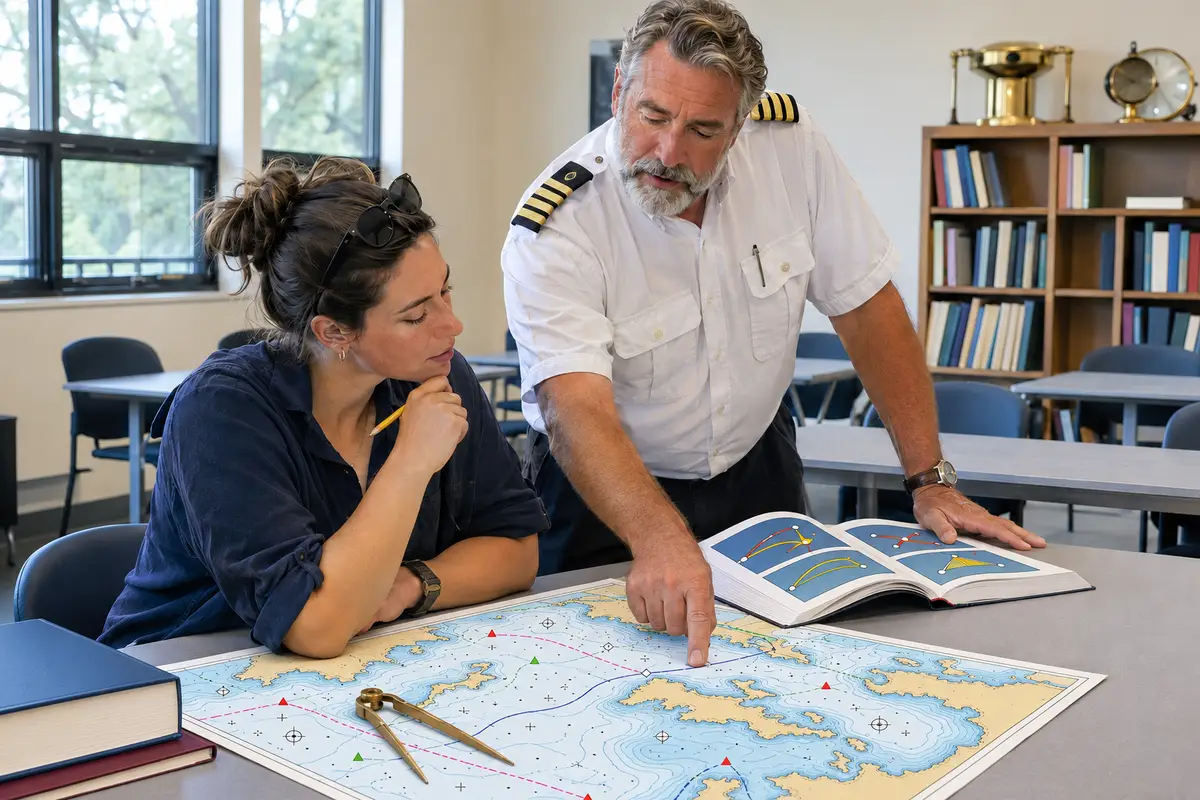
Cover IALA Region B buoyage, lights and day shapes, sound and distress signals, general deck, navigation general and chart plot.
- Practise the Region B distinction
In the United States, red is to starboard. Rehearse the swap from IALA Region A until it feels as natural as any other navigation routine.
Our verdict
Why it fits
- A clear entry-level officer endorsement on a Merchant Mariner Credential
- Built for an uninspected passenger vessel carrying up to six passengers for hire
- A syllabus rooted in the rules, buoyage, signals and chartwork you need to understand
Keep an eye on
- The vessel must be less than 100 GRT
- The six-passenger limit is central to the endorsement
- Your route and the endorsement's limitations still define the work you can do
Choose the USCG OUPV if your aim is to operate the kind of small, uninspected passenger vessel described here and you are ready to learn the rules properly. Give International and Inland Navigation Rules the same attention, and let the Region B detail become second nature before you take that responsibility aboard.
Topics tested by OUPV
Practice tests aligned with OUPV
IALACOLREG Exam Pass
USCG OUPV: get ready for your exam with the Exam Pass
Unlimited timed mock exams, every mistake back until it's right, and a readiness score that shows when you're ready for the exam.
512 exam-style questions with explanations · 7 timed subject exams · every simulator scenario
One payment for 12 months, so it covers a resit too. No subscription.
Practice questions (with answers)
If fitted, the topmark of a special mark is:
Show answer
Correct answer: B. A yellow X-shape (cross)
Special marks have a yellow X-shaped (St. Andrew's cross) topmark. (if fitted).
Emergency wreck marking buoys are coloured:
Show answer
Correct answer: C. Blue and yellow vertical stripes
equal numbers and widths of blue and yellow vertical stripes; 4 to 8 stripes in total. 1 s blue + 0.5 s darkness + 1 s yellow + 0.5 s darkness; period 3 s.
Emergency wreck marking buoys are used for:
Show answer
Correct answer: B. Marking new dangers, including newly discovered wrecks
The emergency wreck marking buoy marks new dangers, including newly discovered wrecks. The competent authority determines further marking once the danger is removed or its information has been sufficiently promulgated.
A vessel engaged in fishing with gear restricting manoeuvrability shows sidelights and a sternlight when:
Show answer
Correct answer: C. Making way through the water
Rule 26: sidelights and sternlight are shown by fishing vessels only when making way through the water.
A dredger of at least 12 metres restricted in ability to manoeuvre shows on the obstructed side:
Show answer
Correct answer: B. Two red all-round lights or balls
Rule 27(d): two red all-round lights or two balls on the obstructed side, two green or two diamonds on the clear side.
The day shape for a vessel of 12 metres or more aground is:
Show answer
Correct answer: C. Three balls vertically
Rule 30(d): three balls in a vertical line is the day shape for a vessel aground.
For a power-driven vessel underway manoeuvring in sight of another vessel, three short whistle blasts mean:
Show answer
Correct answer: C. I am operating astern propulsion
Rule 34(a): three short blasts mean 'I am operating astern propulsion.'
The topmark of a West Cardinal mark is:
Show answer
Correct answer: C. Two cones point to point
Two separate black cones with their points facing each other. The cones must remain clearly separated.
The full guide
The OUPV (Six-Pack) is the USCG's entry-level officer endorsement on a Merchant Mariner Credential, for up to six paying passengers.
Syllabus: full International + Inland Navigation Rules, IALA Region B buoyage, lights and day shapes, sound and distress signals, general deck, navigation general, chart plot.
Who should take OUPV
Candidates seeking an OUPV endorsement for uninspected passenger vessels of less than 100 GRT carrying no more than six passengers for hire, within the route and limitations of the endorsement.
How to prepare
USCG tests both International and Inland Nav Rules — master both. USA is IALA Region B (red-starboard) — watch the direction swap versus Region A.
Other exams
Reviewed by Ramon Curto, Nautical teacher at IECNPC · Last reviewed: