- 500 GT or moreships covered by this navigational-watch standardSTCW II/1
- II/1the STCW standard for an officer in charge of a navigational watchSTCW II/1
- 1972the COLREG rules included in the core preparationCOLREG 1972
- A-VIIIthe STCW Code watchkeeping standard in the core syllabusSTCW Code A-VIII
The professional standardWhat STCW II/1 is, in plain English
STCW II/1 sets IMO's mandatory minimum standards for flag-State certification of officers in charge of a navigational watch on ships of 500 GT or more. It is aimed at professional seafarers pursuing OOW certification, with the applicable flag-State and route limitations forming part of the picture.
What the preparation coversA bridge-ready foundation, not a recreational ticket
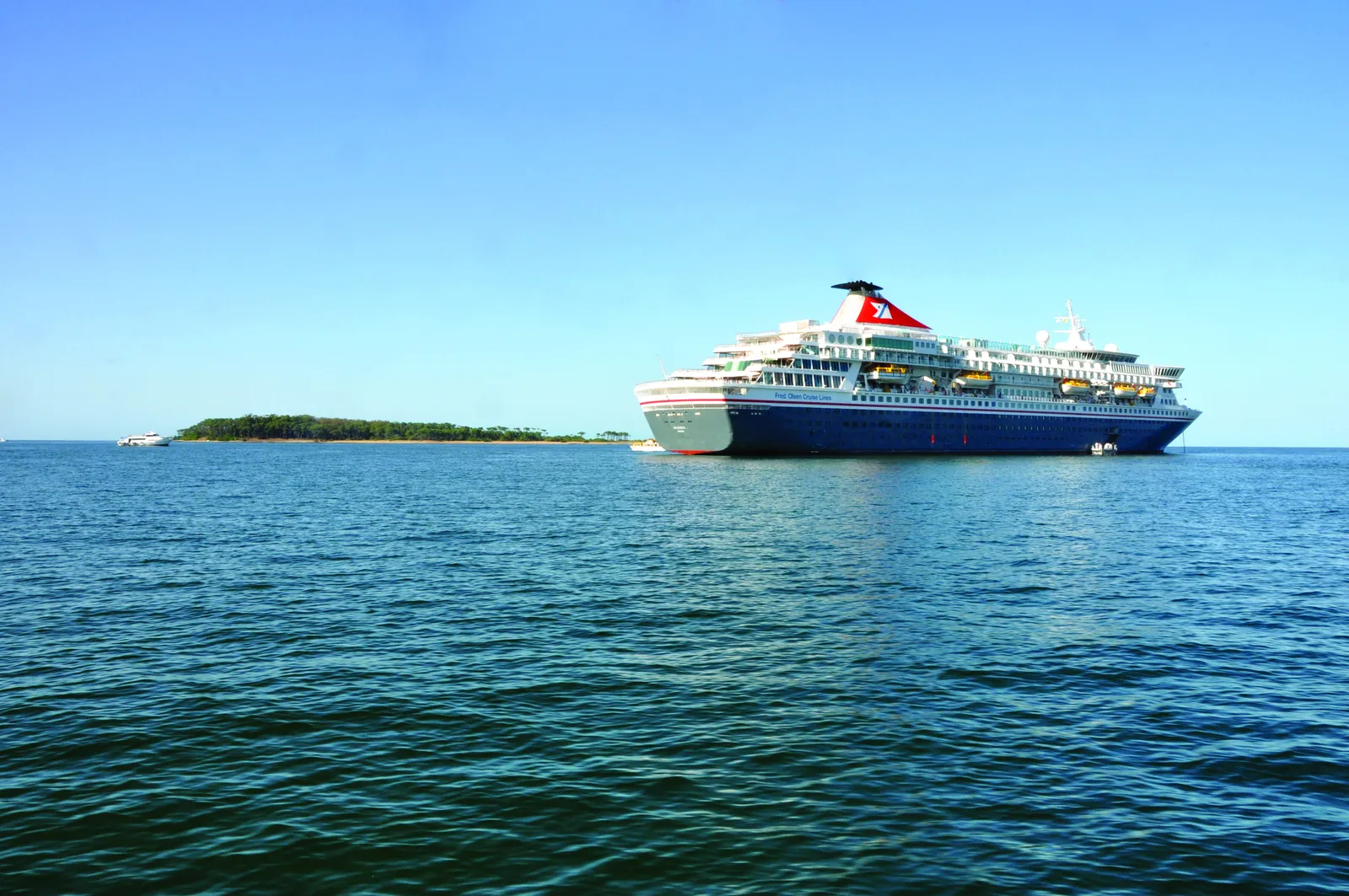
The core is broad because a navigational watch is broad: full COLREG 1972, IALA buoyage, watchkeeping standards, bridge procedures, chartwork, meteorology and communications. The useful way to read that list is as one working toolkit, where rules, information and bridge practice all meet.
This guide helps you build foundations in
- Full COLREG 1972 and IALA buoyage
- Watchkeeping standards under STCW Code A-VIII
- Bridge procedures, chartwork, meteorology and communications
It does not replace
- The full professional STCW assessment
- Flag-State certification
- Required sea service
Before you commitWho this route is for
- Be a professional seafarer pursuing OOW certification
- Work within the applicable flag-State and route limitations
- Allow for the required sea service alongside professional certification
A sensible preparation pathHow to approach STCW II/1
- Set your certification context
Start with the flag-State and route limitations that apply to the OOW certification you are pursuing.
- Build the rules-of-the-road base
Study the full COLREG 1972 and IALA buoyage foundations so that marks, rules and decisions connect.
- Work through the bridge subjects
Bring watchkeeping standards, bridge procedures, chartwork, meteorology and communications into the same study plan.
- Complete the professional elements
Plan for the full professional STCW assessment, flag-State certification and required sea service; study preparation does not replace them.
The magazine verdict
What stands out
- A clear professional standard for officers in charge of a navigational watch
- A genuinely joined-up core: rules, buoyage, bridge work and navigation practice
- Directly focused on ships of 500 GT or more
What to plan for
- It is subject to applicable flag-State and route limitations
- Professional assessment, certification and sea service still sit beyond study preparation
- The subject range extends well beyond COLREG and buoyage alone
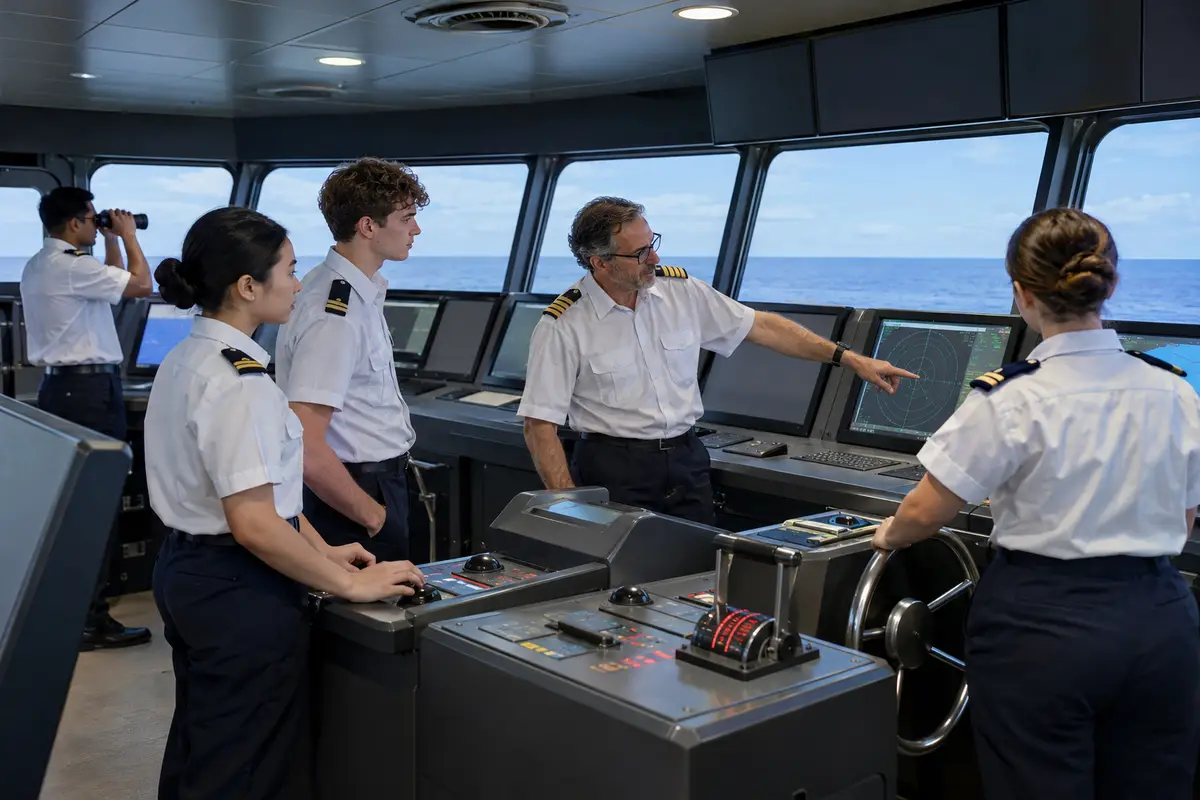
Choose STCW II/1 when your course is towards OOW certification on larger ships. Treat COLREG and IALA as the dependable starting point, then give the same attention to watchkeeping, bridge procedures, chartwork, meteorology and communications.
Topics tested
Practice tests
IALACOLREG Exam Pass
STCW II/1: get ready for your exam with the Exam Pass
Unlimited timed mock exams, every mistake back until it's right, and a readiness score that shows when you're ready for the exam.
512 exam-style questions with explanations · 7 timed subject exams · every simulator scenario
One payment for 12 months, so it covers a resit too. No subscription.
Practice questions (with answers)
A vessel of 12 metres or more aground at night additionally shows:
Show answer
Correct answer: C. Two red all-round lights vertically
Rule 30(d): a vessel aground shows anchor lights plus two all-round red lights in a vertical line.
Five or more short and rapid blasts mean:
Show answer
Correct answer: C. Doubt or danger — the intentions of the other vessel are not understood
Rule 34(d): at least five short and rapid blasts indicate doubt about whether sufficient action is being taken.
A power-driven vessel underway but stopped and making no way through the water in fog sounds:
Show answer
Correct answer: B. Two prolonged blasts in succession at intervals of not more than 2 minutes
Rule 35(b): two prolonged blasts in succession at intervals of not more than 2 minutes.
A masthead light shows over an arc of:
Show answer
Correct answer: C. 225 degrees
Rule 21(a): masthead light shows over an arc of 225 degrees from dead ahead to 22.5 degrees abaft the beam on each side.
How does IALA Region B differ from Region A?
Show answer
Correct answer: B. The colours are reversed — red to starboard
Region A: port-hand red, starboard-hand green. Region B: port-hand green, starboard-hand red. Interpret both in the charted conventional direction of buoyage.
An East Cardinal mark shows how many quick flashes?
Show answer
Correct answer: B. 3 flashes
White lights, when fitted: North Q or VQ; East VQ(3) 5 s or Q(3) 10 s; South VQ(6)+LFl 10 s or Q(6)+LFl 15 s; West VQ(9) 10 s or Q(9) 15 s. The long flash lasts at least 2 s.
If fitted, the topmark of an isolated danger mark is:
Show answer
Correct answer: B. Two black spheres vertically
Isolated danger marks have two black spheres (balls) as topmark. (if fitted).
Safe water marks are used as:
Show answer
Correct answer: B. Fairway or mid-channel marks
Safe water marks are used as fairway, mid-channel, or landfall marks.
The full guide
STCW II/1 sets IMO's mandatory minimum standards for flag-State certification of officers in charge of a navigational watch on ships of 500 GT or more.
Core: full COLREG 1972, IALA buoyage, watchkeeping standards (STCW Code A-VIII), bridge procedures, chartwork, meteorology, communications.
Who should take STCW II/1
Professional seafarers pursuing OOW (Officer of the Watch) certification subject to the applicable flag-State and route limitations.
How to prepare
Use this site to study COLREG and IALA foundations; it does not replace the full professional STCW assessment, flag-State certification or required sea service.
Other exams
Reviewed by Ramon Curto, Nautical teacher at IECNPC · Last reviewed: