
- From 17minimum age for Yachtmaster Coastal
- From 18minimum age for Yachtmaster Offshore
- 150 milesfrom harbour for Offshore cruising passages
- 6 to 10 hoursCoastal practical exam for one candidate
- 8 to 12 hoursOffshore practical exam for one candidate
- 200 GTvessel limit stated for Yachtmaster Ocean
A practical benchmarkWhat Yachtmaster is, in plain English
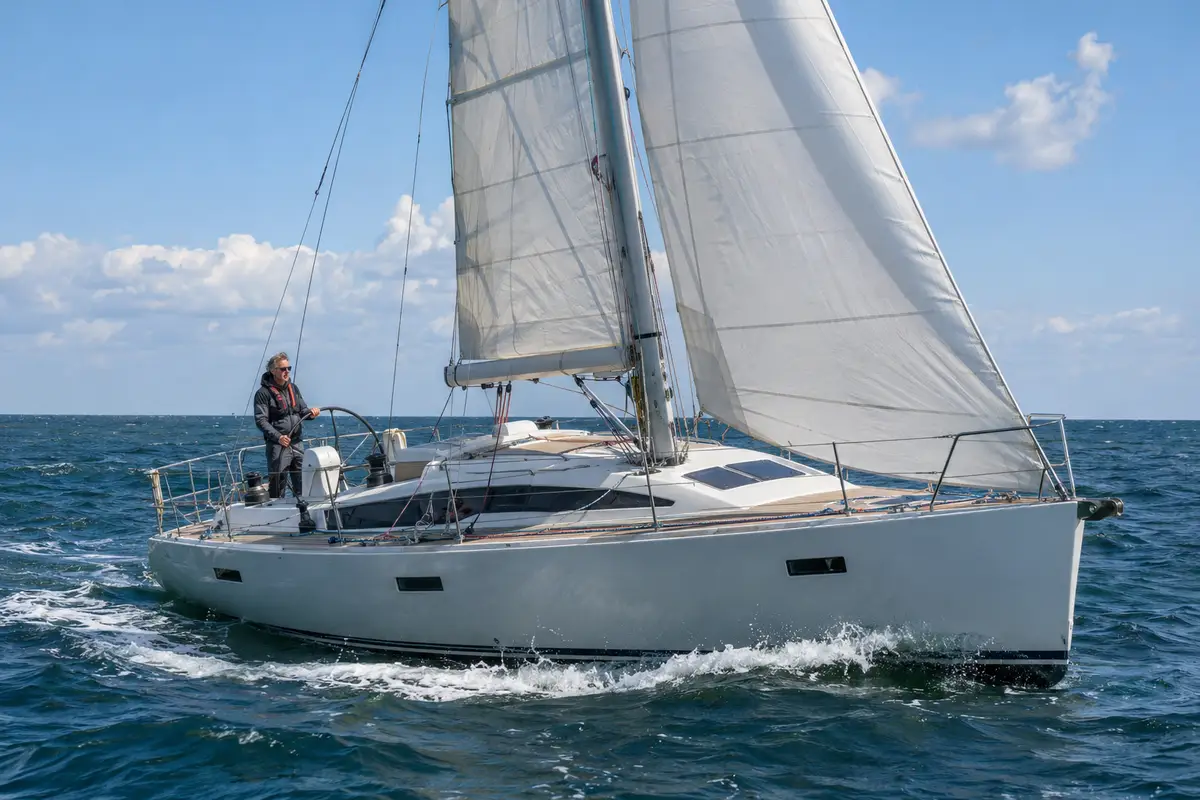
RYA Yachtmaster Coastal and Offshore are certificates of competence assessed through practical examinations, each with its own experience requirements. Coastal is for skippers making coastal passages; Offshore covers cruising passages no more than 150 miles from harbour, by day or at night. Both can carry a sail or power endorsement.
Choose your passageWhat the certificates cover—and what they do not
Think of Coastal and Offshore as two related practical targets, rather than one interchangeable certificate. The difference matters: Offshore is specifically described for cruising passages no more than 150 miles from harbour, while Coastal is for coastal passages.
With Yachtmaster, you can aim to
- Skipper coastal passages with Yachtmaster Coastal
- Cruise by day or at night on Offshore passages no more than 150 miles from harbour
- Take the sail or power endorsement available for Coastal and Offshore
Do not mistake study support for the certificate
- Use COLREG practice questions as a replacement for the practical assessment
- Treat practice questions as a substitute for qualifying experience
- Assume study questions provide a commercial endorsement
Before you commitRequirements to have in view
- Be at least 17 for the RYA/MCA Yachtmaster Coastal Certificate of Competence
- Be at least 18 for the RYA/MCA Yachtmaster Offshore Certificate of Competence
- Meet the separate experience requirements for the certificate you are pursuing
- Choose whether you need a sail or power endorsement
A sensible routeHow to prepare for Yachtmaster
- Choose Coastal or Offshore
Start with the certificate that fits your intended passages: coastal passages for Yachtmaster Coastal, or cruising passages no more than 150 miles from harbour for Yachtmaster Offshore.
- Build the right experience
The two certificates have separate experience requirements, so make this part of the plan from the outset.
- Prepare the examination syllabus
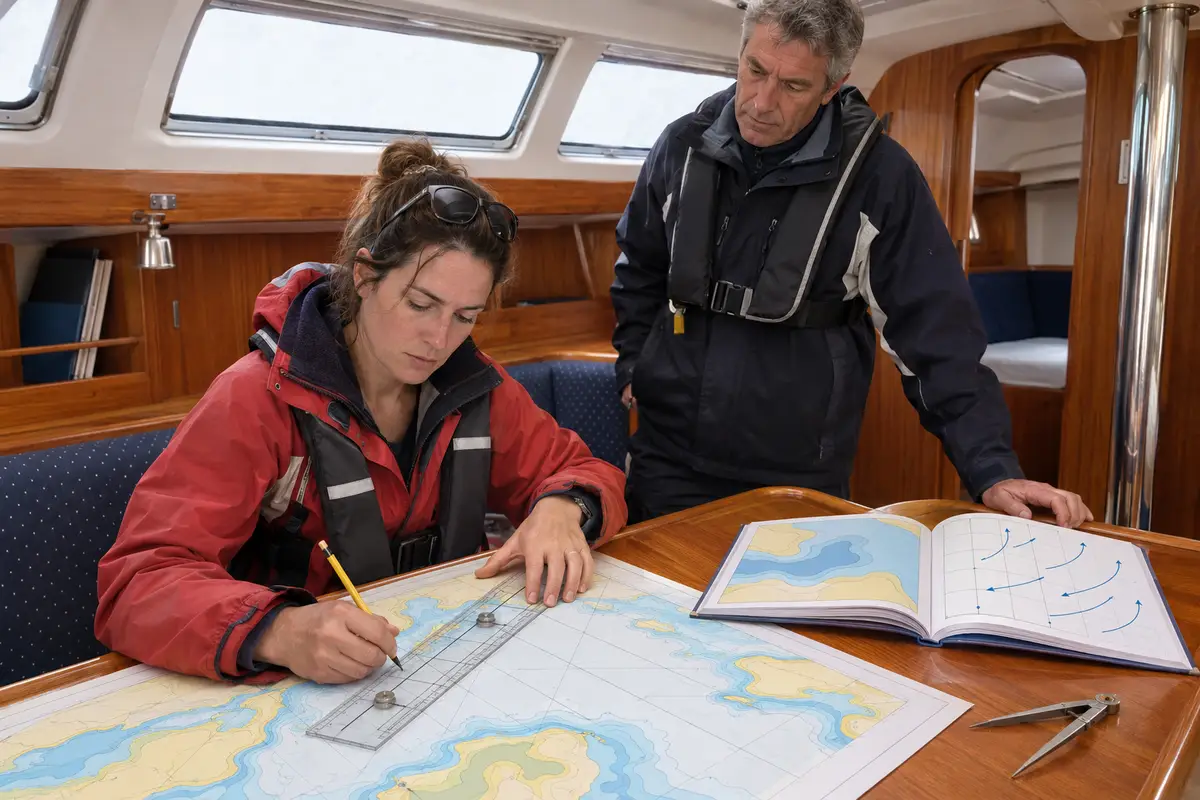
Work through full COLREG 1972, IALA, coastal and offshore navigation, tidal calculations, weather, safety, passage planning and the oral exam.
- Take the practical examination
The Coastal practical exam lasts 6 to 10 hours for one candidate; the Offshore practical exam lasts 8 to 12 hours for one candidate.
At the assessmentThe practical exam at a glance
| Certificate | Minimum age | Practical examination |
|---|---|---|
| RYA/MCA Yachtmaster Coastal Certificate of Competence | 17 | 6 to 10 hours for one candidate |
| RYA/MCA Yachtmaster Offshore Certificate of Competence | 18 | 8 to 12 hours for one candidate |
Our verdict
What stands out
- It is a practical certificate of competence, not simply a theory test
- You can pursue a sail or power endorsement for Coastal and Offshore
- Offshore explicitly covers day and night cruising passages no more than 150 miles from harbour
Keep in mind
- Coastal and Offshore have separate experience requirements
- The practical examinations are substantial: 6 to 10 hours for Coastal and 8 to 12 hours for Offshore
- Practice questions do not replace the practical assessment, qualifying experience or commercial endorsement
Choose Yachtmaster when you already have significant sea miles and want a practical benchmark for the passages ahead. Start by matching Coastal or Offshore to the water you intend to cover, then give the practical assessment and experience requirements the same attention as the theory.
Topics tested
Practice tests
IALACOLREG Exam Pass
RYA Yachtmaster: get ready for your exam with the Exam Pass
Unlimited timed mock exams, every mistake back until it's right, and a readiness score that shows when you're ready for the exam.
512 exam-style questions with explanations · 7 timed subject exams · every simulator scenario
One payment for 12 months, so it covers a resit too. No subscription.
Practice questions (with answers)
Where it is impracticable for a seaplane or WIG craft to show the lights and shapes prescribed in Part C, she must:
Show answer
Correct answer: B. Exhibit lights and shapes as closely similar as possible in characteristics and position to those prescribed
Rule 31: where compliance is impracticable, seaplanes and WIG craft shall exhibit lights and shapes as closely similar in characteristics and position as possible.
A 'short blast' is defined as a blast of about:
Show answer
Correct answer: B. One second
Rule 32(b): a short blast means a blast of about one second's duration.
A vessel of 100 metres or more must carry:
Show answer
Correct answer: C. A whistle, bell, and gong
Rule 33: vessels 100m+ must have a whistle, bell, AND gong.
Signals to attract attention must:
Show answer
Correct answer: B. Not be mistaken for any prescribed signal or aid to navigation
Rule 36: signals to attract attention must not be mistaken for any other prescribed signal or navigation aid.
An isolated danger mark indicates:
Show answer
Correct answer: B. A danger with navigable water all around
An isolated danger mark is on or near a danger with navigable water around it. Consult charts and nautical publications for the extent of the danger and safe passing distance.
Safe water marks have:
Show answer
Correct answer: A. Red and white vertical stripes
Safe water marks are red and white vertical stripes, indicating navigable water all around.
Special marks are coloured:
Show answer
Correct answer: C. Yellow
Special marks are yellow, indicating special areas like military zones, cables, or pipelines.
How does IALA Region B differ from Region A?
Show answer
Correct answer: B. The colours are reversed — red to starboard
Region A: port-hand red, starboard-hand green. Region B: port-hand green, starboard-hand red. Interpret both in the charted conventional direction of buoyage.
The full guide
RYA Yachtmaster Coastal and Offshore are certificates of competence assessed through practical examinations with separate experience requirements.
Syllabus: full COLREG 1972, IALA, coastal & offshore navigation, tidal calculations, weather, safety, passage planning, oral exam.
Who should take the Yachtmaster
Skippers with significant sea miles targeting commercial endorsement or long offshore passages.
How to prepare
Prepare the official RYA examination syllabus, including passage planning, navigation, tides, safety and boat handling. These COLREG practice questions cover part of the preparation; they do not replace the practical assessment, qualifying experience or any commercial endorsement.
Other exams
Reviewed by Ramon Curto, Nautical teacher at IECNPC · Last reviewed: