Part B-IICritical
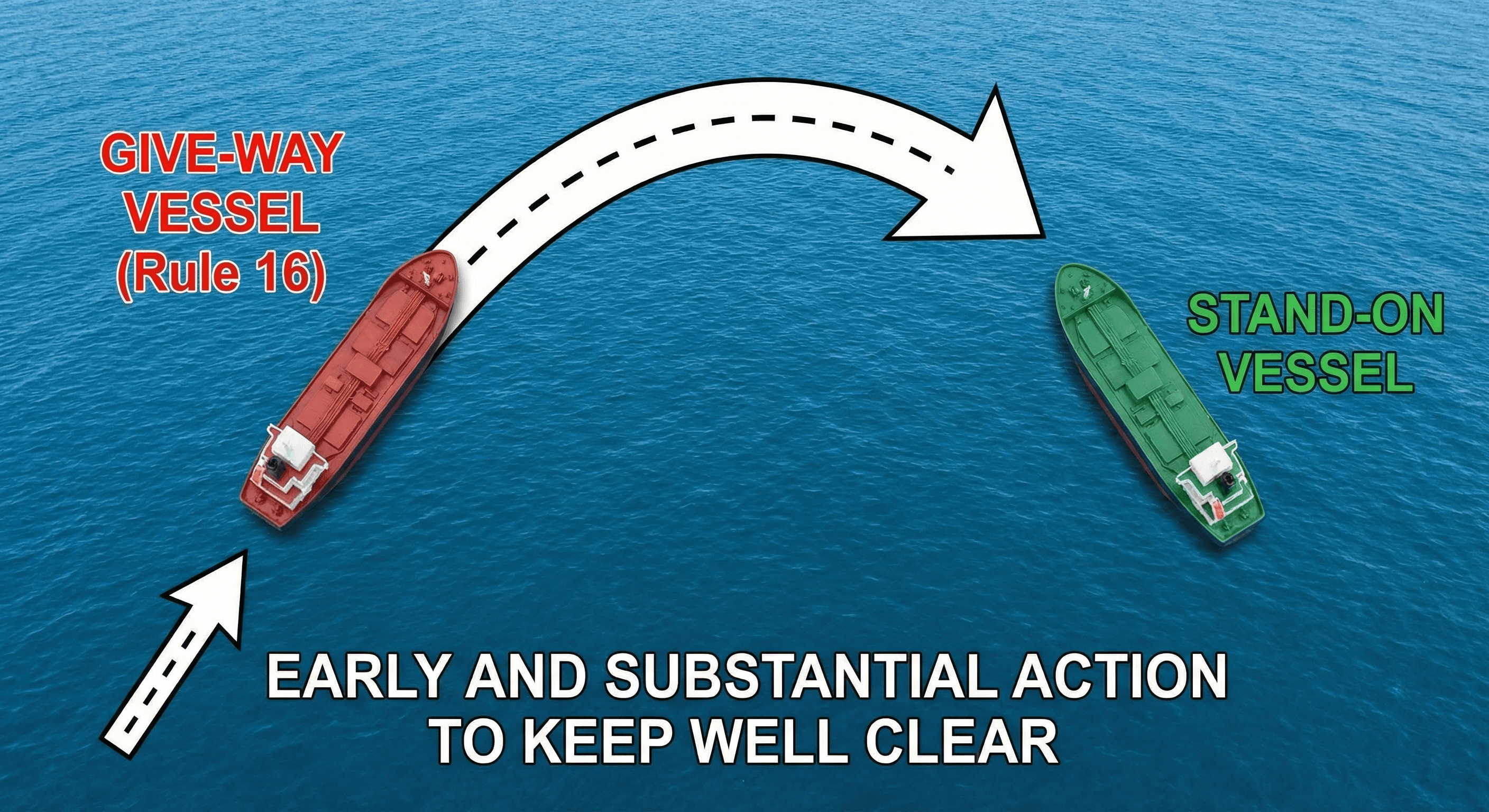
Rule 16: Action by give-way vessel
The give-way vessel must act first, early and decisively.
Detailed Explanation
Any vessel directed to keep out of the way shall, as far as possible, take early and substantial action to keep well clear. Small late manoeuvres are exactly what this rule aims to prevent.
Key Points
- Give-way vessel must act early and substantially
- Take positive action well before close quarters
- Any combination of course/speed change allowed
Examples
- In a crossing situation you are give-way. You alter 30° to starboard at 5 miles distance — an early and substantial action per Rule 16 that prevents a close-quarters situation.
- A ferry identifies herself as give-way in a crossing. She delays action until 1.5 miles hoping the stand-on vessel will move first. This violates Rule 16, which demands early and substantial action to keep well clear.
Common Mistakes
- Making a late, small alteration hoping the stand-on vessel will also adjust, instead of acting early and substantially.
- Altering course towards the stand-on vessel thinking a speed reduction alone is enough.
- Assuming slowing down slightly satisfies Rule 16 when the manoeuvre is not readily apparent to the other vessel.