Part B-IICritical
Rule 13: Overtaking
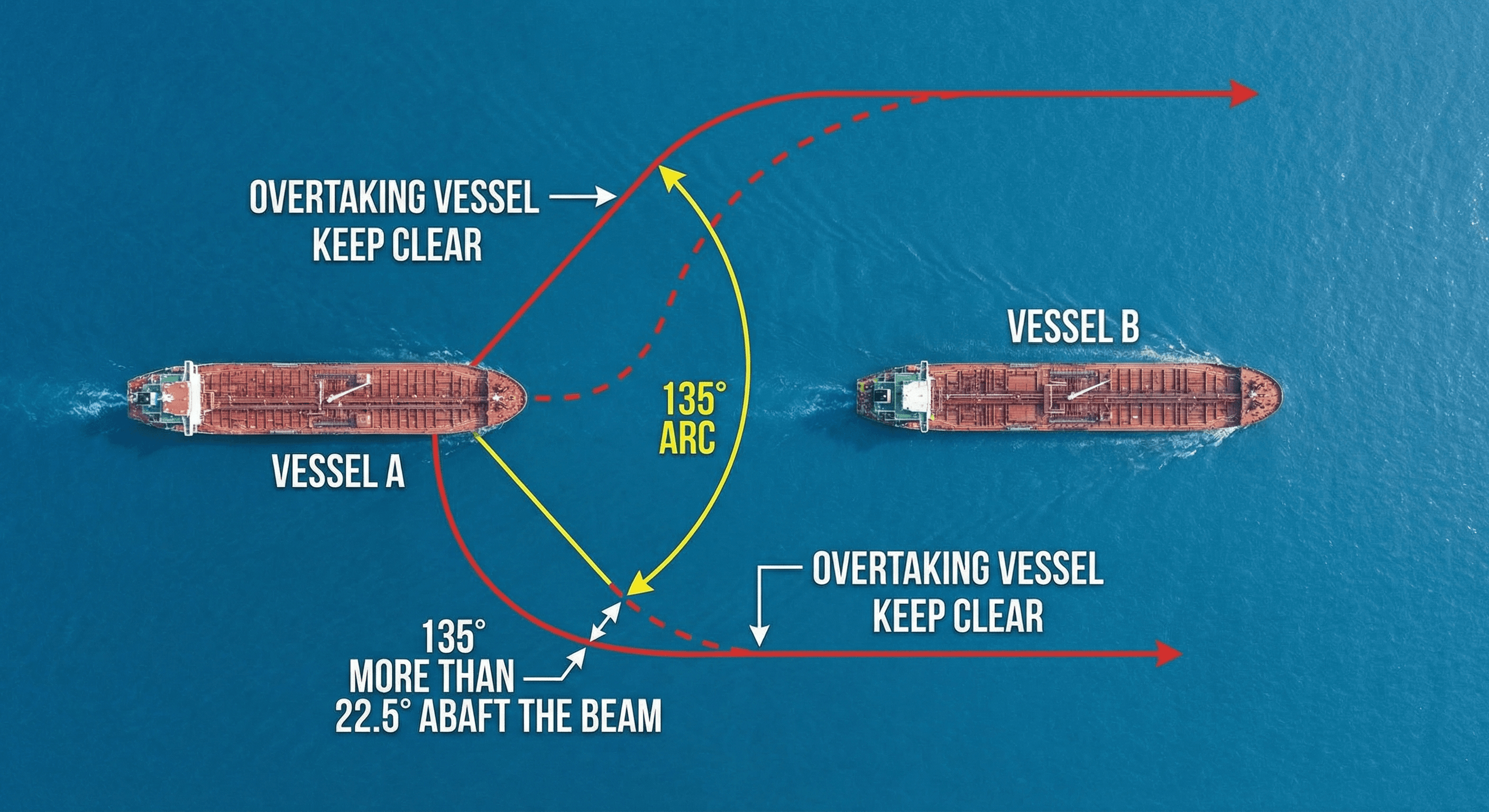
Overtaking duty is strict: the overtaking vessel keeps clear until finally past and clear.
Detailed Explanation
(a) Any overtaking vessel must keep out of the way of the vessel being overtaken.
(b) Overtaking means approaching from more than 22.5° abaft beam (night test: sternlight only).
(c) In doubt, assume overtaking.
(d) Later bearing changes do not convert it to crossing or remove overtaking duty until finally past and clear.
Key Points
- 22.5° abaft the beam test defines overtaking
- Duty to keep clear applies until finally past and clear
- An overtaking vessel remains give-way regardless of later changes
- Doubt about overtaking → treat as overtaking
Examples
- You approach a bulk carrier from 30° abaft her port beam on a converging course. That is more than 22.5° abaft beam, so you are the overtaking vessel under Rule 13(b) and must keep clear until finally past and clear.
- After overtaking a tanker, the relative bearing changes and you are now technically forward of her beam. Rule 13(d) states this subsequent alteration does not relieve you of the duty to keep clear.
- At night you can see only the sternlight of the vessel ahead — no sidelights. This confirms you are approaching from abaft beam; you treat the situation as overtaking per Rule 13(b).
Common Mistakes
- Believing the overtaking duty ends once you change course to cross the other vessel's bow.
- Not recognizing 22.5 degrees abaft the beam as the critical overtaking sector boundary.
- Assuming a change in relative bearing converts an overtaking situation into a crossing one.