Part B-IIntermediate
Rule 9: Narrow channels
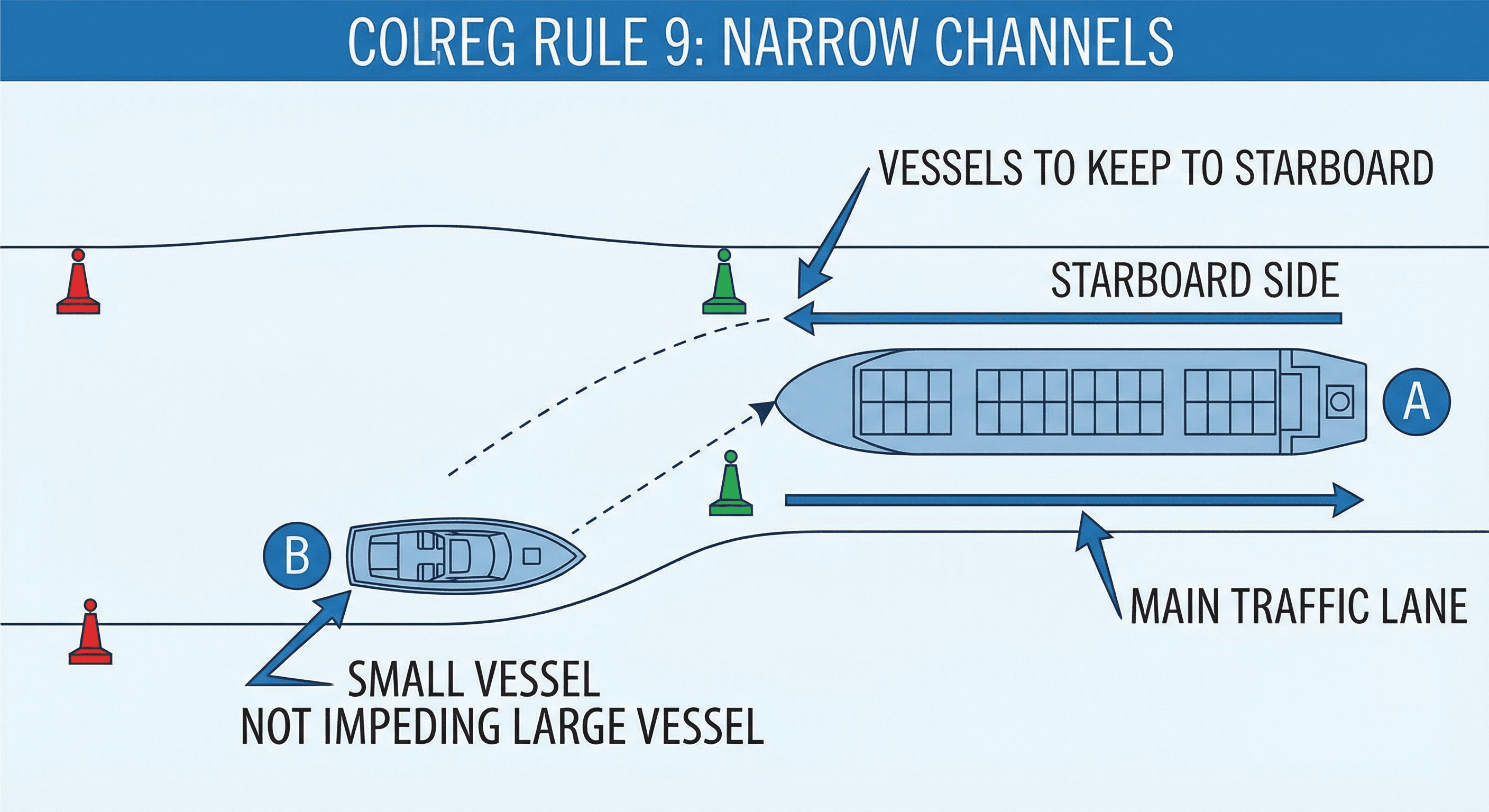
In narrow channels, keep disciplined starboard-side track and never impede vessels constrained to the channel.
Detailed Explanation
(a) Keep as near as safe/practicable to the starboard outer limit.
(b) Vessels under 20 m and sailing vessels shall not impede vessels that can safely navigate only in the channel/fairway.
(c) Fishing vessels shall not impede other vessels navigating in the channel/fairway.
(d) Do not cross if crossing impedes a channel-constrained vessel; that vessel may use Rule 34(d) doubt signal.
(e) Overtaking in narrow channels: use Rule 34(c) intention/agreement signals; Rule 13 still applies.
(f) Near bends/obscured reaches: proceed with special caution and sound Rule 34(e).
(g) Avoid anchoring in narrow channels when circumstances permit.
Key Points
- Keep to starboard side of narrow channel
- Do not impede vessels that can only navigate in the channel
- Vessels <20m and sailing vessels must not impede
- Overtaking in a channel requires sound signal and agreement
Examples
- Your 30 m sailing yacht is beating upwind in a narrow channel when a VLCC approaches from astern. Under Rule 9(b), you shall not impede the tanker that can safely navigate only within the channel — you move to the edge.
- A tug-and-tow rounds a blind bend in a narrow channel and sounds one prolonged blast per Rule 9(f). You hear a reply of one prolonged from beyond the bend and reduce speed.
- You are overtaking a bulk carrier in a buoyed channel. Before passing on her port side, you sound two prolonged followed by two short blasts, requesting agreement under Rule 9(e)(i).
Common Mistakes
- A small vessel claiming right of way in a narrow channel instead of keeping clear of vessels that can only navigate within the channel.
- Anchoring in a narrow channel without exhausting other options first.
- Failing to sound the correct bend signal (one prolonged blast) when approaching a blind bend in a channel.