Part B-ICritical
Rule 5: Look-out
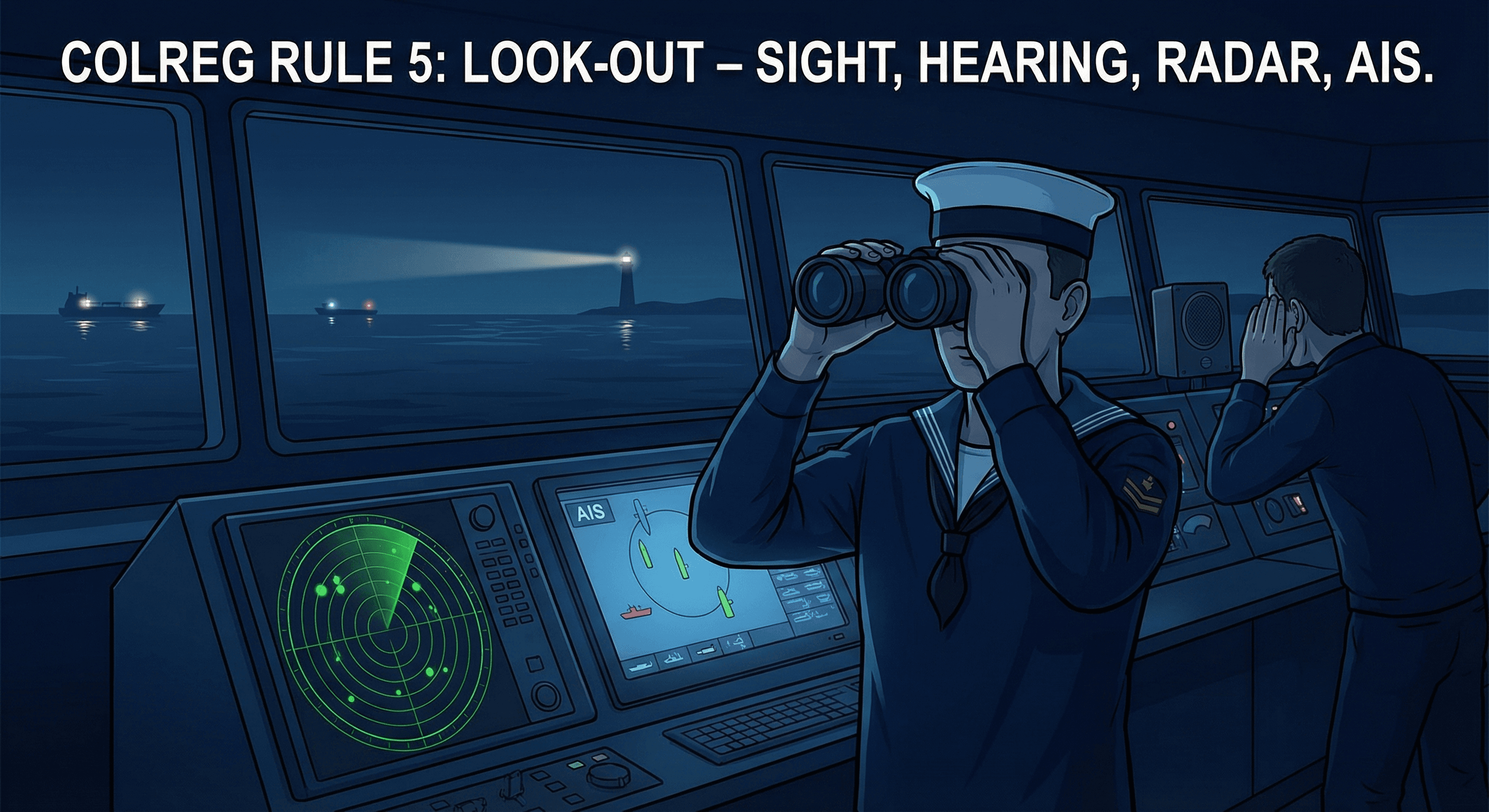
Keep an effective look-out continuously, using human senses and all available tools.
Detailed Explanation
A proper look-out is continuous and multi-source: sight, hearing and all available means suitable to conditions. The objective is a full appraisal of situation and collision risk. If radar/AIS are available, relying only on eyesight is poor seamanship.
Key Points
- Look-out at ALL times, not only in heavy traffic
- Sight + hearing + all available means (radar, AIS)
- Goal: full appraisal of situation and collision risk
- Electronic aids supplement—never replace—human watch
Examples
- On night watch you hear a faint foghorn off the port bow, but see nothing visually. You alert the master, increase radar gain and assign a dedicated auditory lookout — Rule 5 requires all available means.
- Approaching a busy anchorage at dusk, you station a bow lookout with a hand-held radio in addition to the bridge radar watch to maintain proper lookout by sight and hearing.
- A tanker OOW relies solely on ARPA without visual checks. The master corrects him: Rule 5 demands sight, hearing and every available means, not just radar.
Common Mistakes
- Relying only on visual watch when radar and AIS are available.
- Posting a look-out only in heavy traffic, not at all times.
- Treating electronic aids as a substitute for human look-out rather than a supplement.