Part B-IICritical
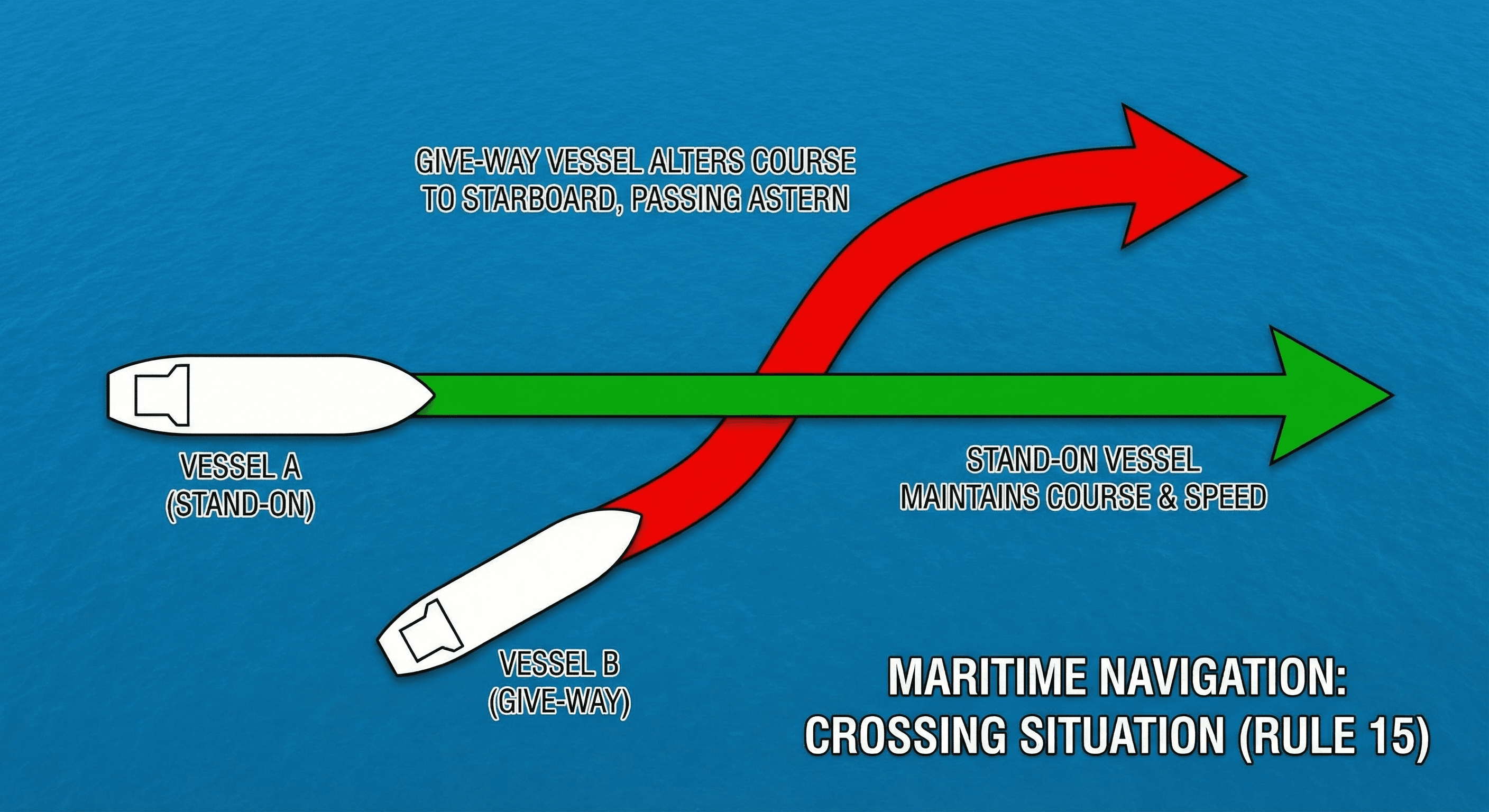
Rule 15: Crossing
In crossing, if the other vessel is on your starboard side, you are the give-way vessel.
Detailed Explanation
When two power-driven vessels cross with collision risk, the vessel that has the other on her own starboard side keeps out of the way and should avoid crossing ahead if circumstances permit.
Key Points
- Vessel to your starboard = you are give-way
- Avoid crossing ahead of the stand-on vessel
- Alter to starboard early and pass astern
- Only applies to power-driven vessels in sight
Examples
- You are OOW on a cargo ship heading 090°. A tanker bears 000° with steady bearing, crossing from your starboard side. You are the give-way vessel and alter course to starboard to pass astern of the tanker.
- At night both sidelights and a masthead light are visible bearing 045° — bearing steady. The other vessel is on your starboard side in a crossing situation; you must keep clear under Rule 15.
- A container ship heading north detects a ferry crossing from east to west on steady bearing 070°. The ferry is on the container ship's starboard side; the container ship is give-way and must avoid crossing ahead per Rule 15.
Common Mistakes
- Attempting to cross ahead of the stand-on vessel instead of passing astern when you are the give-way vessel.
- Confusing which vessel gives way by looking at port/starboard relative to your own heading instead of where the other vessel lies.
- Applying the crossing rule to vessels not on crossing courses, such as nearly reciprocal headings that constitute a head-on situation.