Part B-IIIntermediate
Rule 12: Sailing vessels
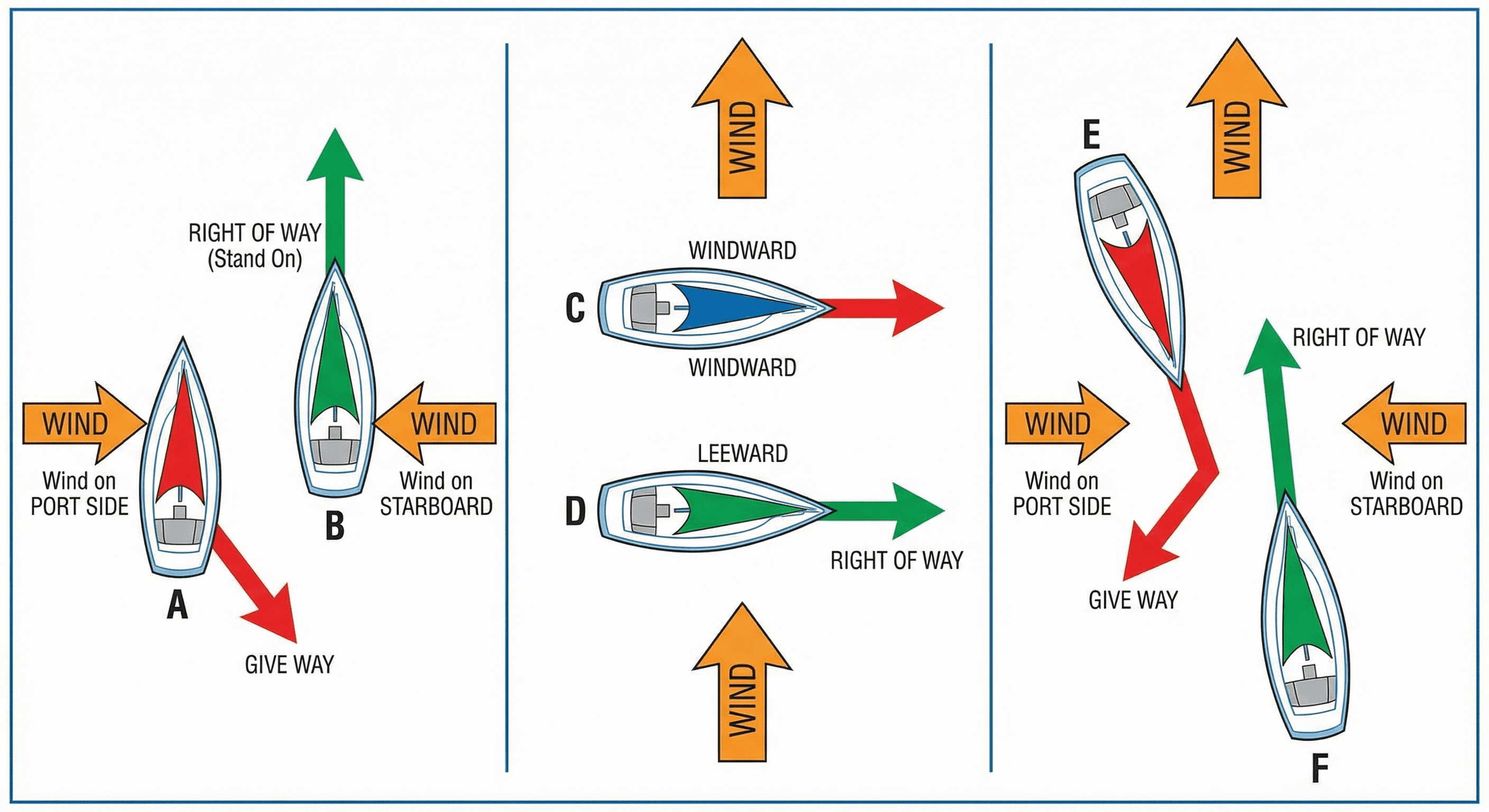
Between sailing vessels: port tack gives way; windward gives way to leeward.
Detailed Explanation
(a) When two sailing vessels approach with risk:
(i) Different tacks: vessel with wind on port side keeps clear.
(ii) Same tack: windward keeps clear of leeward.
(iii) If wind-on-port vessel sees the other to windward and cannot determine other vessel’s tack with certainty, she keeps clear.
(b) Windward side is opposite side carrying mainsail (or largest fore-and-aft sail in square-rigged vessel).
Key Points
- Wind on port side → give way to starboard-tack vessel
- Windward vessel gives way when both on same tack
- If unsure which tack the other is on, give way
Examples
- Two sailing yachts approach each other. Yacht A has wind on her port side and Yacht B on starboard. Under Rule 12(a)(i), Yacht A (port tack) keeps clear of Yacht B.
- Two sailing vessels are on the same tack, both with wind on starboard. The windward vessel keeps clear of the leeward vessel per Rule 12(a)(ii).
- You are sailing and unsure which tack the other sailing vessel is on. Rule 12(a)(iii) requires that if you have the wind on your port side, you keep clear.
Common Mistakes
- Confusing which tack a sailing vessel is on by looking at sail position rather than the side from which the wind blows.
- Applying Rule 12 when the sailing vessel is using its engine, which makes it a power-driven vessel under Rule 3.
- Believing the windward vessel has stand-on rights when it should keep clear of the leeward vessel on the same tack.