Decide · Four situations at sea. Decide first, then read why.
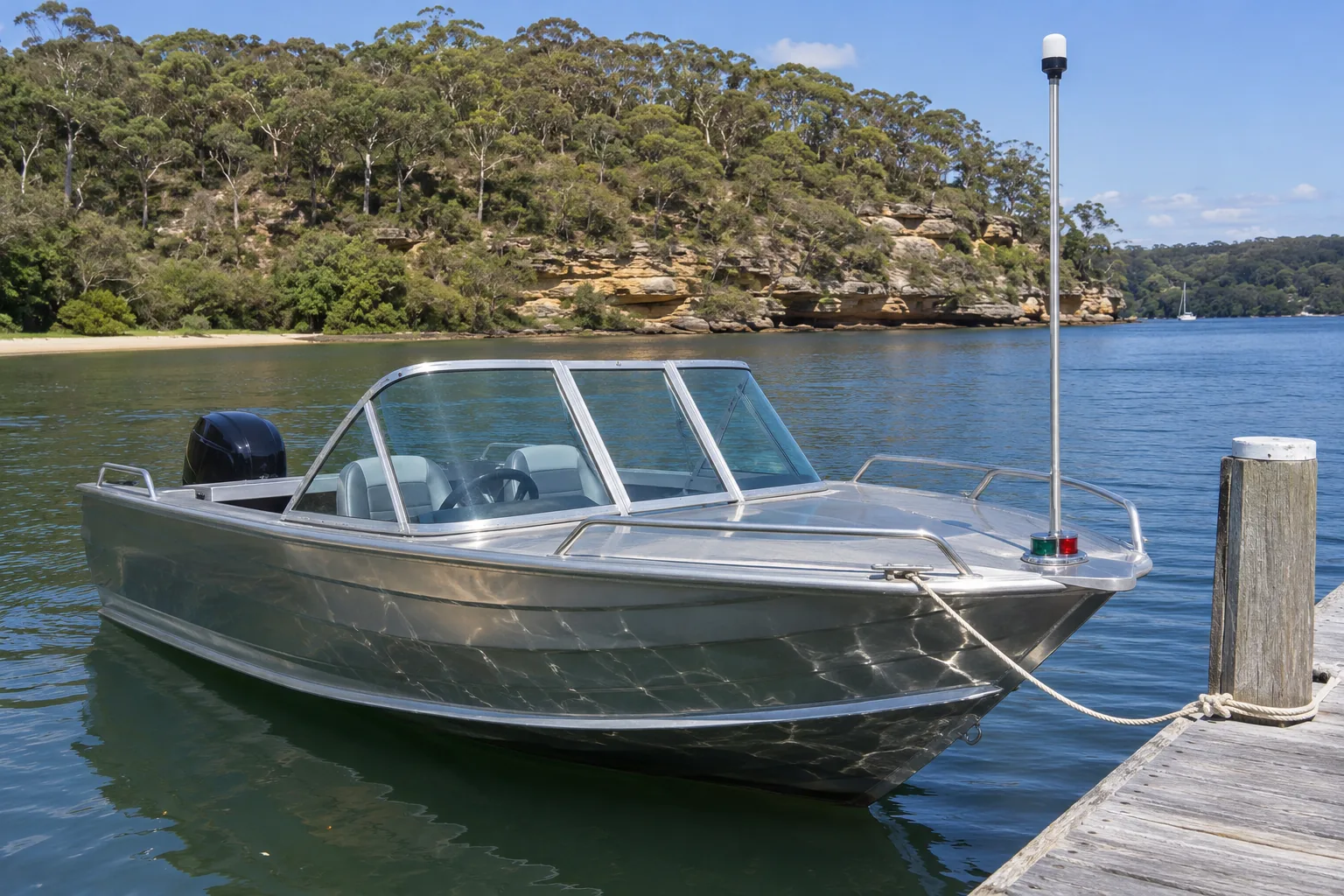
You are preparing a 5.5-metre runabout capable of 25 knots for an evening trip on Pittwater. You plan to travel at 5 knots. Which lights do you need underway after sunset?
Key points
- Small powerboat lightsUnder 12 metres: sidelights, plus either masthead and stern lights or an all-round white light.
- Red to port; green to starboard. Show lights sunset to sunrise and in restricted visibility.
- Keep the masthead or all-round white light at least 1 metre above the sidelights.
- Under 7 metres and maximum speed no more than 7 knots: all-round white, plus sidelights if possible. Slowing a faster boat does not qualify it.
- PWC must not be driven between sunset and sunrise.
- Sail and anchor are differentUse lights for what the vessel is doing now.
- A 7–20-metre yacht under sail may use sidelights and a sternlight, or a mast-top tricolour. Under 7 metres, fit sidelights and a sternlight if possible; otherwise use a torch.
- Using the engine means powered-vessel lighting rules, even with sails set.
- At anchor up to 50 metres: all-round white, with underway sidelights off.
- Drifting or holding position with a GPS-guided electric motor counts as underway.
- Recognise the directionLook at the pattern, then keep watching.
- Coming towards you: green on your left, red on your right; powered vessels also show a forward-facing white light.
- Crossing red: from your right to left. Crossing green: from your left to right.
- A single white light can mean anchored, moving away or a small vessel underway in another direction.
- Keep a lookout for faint lights against a bright shoreline.
- Working vessels and ferriesSpecial lights tell you there is more to the situation.
- Many lights or lights high up may indicate a large ship or fishing vessel: keep well clear.
- Dredge working lights: green marks the safe passing side; red marks the obstruction side.
- Sydney Harbour high-speed ferry travelling at speed: normal powered-vessel lights plus flashing all-round yellow.
- Hear the action or warningOne short starboard, two short port, three short engines astern.
- Five short blasts express doubt about intentions or sufficient collision-avoidance action.
- One long blast warns of a blind bend.
- Short: about 1 second. Long: 4–6 seconds.
- Carry a sound signal device. The manoeuvring signals here apply when vessels are in sight.
Check what you have read
Smoke reduces visibility during a daytime trip. When must you display navigation lights?
Full explanation and lessons
Topic 1 of 6
Your powerboat's lights
Display navigation lights from sunset to sunrise and in restricted visibility, including fog, smoke or glare.
Red is your port sidelight; green is your starboard sidelight. Check the actual lights before leaving, not just the switches. Keep them clear of people, cabin structures and deck lights (Boating Handbook, pp. 116–118, 122).
A powerboat under 12 metres underway needs separate or combined sidelights, plus either a white masthead light and white sternlight, or an all-round white light. The masthead or all-round white light must be at least 1 metre above the sidelights. For this size of boat, sidelights have a minimum visibility range of 1 nautical mile; the white lights have a minimum range of 2 nautical miles (pp. 117, 119).
A powerboat under 7 metres with a maximum speed of no more than 7 knots must show an all-round white light, with sidelights if possible. Maximum speed means what the boat can do. A faster boat does not qualify simply because you drive slowly. PWC must not be driven between sunset and sunrise; fitting lights does not change that restriction. The handbook recommends carrying a torch on a PWC in case of restricted visibility (p. 119).
For powered vessels between 12 and 50 metres, the handbook specifies a masthead light at least 2.5 metres above the gunwale, sidelights (separate or combined) and a sternlight. Combined sidelights must be at least 1 metre below the masthead light. For vessels between 12 and 20 metres, the minimum visibility ranges are 3 nautical miles for the masthead light and 2 nautical miles for sidelights; the sternlight range remains 2 nautical miles (pp. 117, 120).
- All-round white: 360°. Masthead white: 225°, from ahead to just behind each beam.
- Each sidelight: 112.5°, on its own side. Sternlight: white, 135° aft.
- Fit the masthead or all-round white light on the centreline if practical, above obstructions and clear of the driver's eyes. Aim sidelights across the water, not straight up or only forward (p. 118).
- Dim electronic displays and avoid lights that spoil anyone's night vision.
- The handbook recommends all vessels carry a torch where practical, in case they are caught out after dark (p. 116).
Topic 2 of 6
Sailing, anchoring and staying in one place
A sailing boat under 7 metres must display sidelights and a sternlight if possible.
If lights cannot be attached, use a torch; shining it on the sails or deck helps others see you. A sailing boat between 7 and 20 metres may use separate sidelights and a sternlight, or a combined tricolour lantern at or near the mast top. The handbook recommends separate sidelights and a sternlight against busy shore lighting, such as Sydney Harbour (pp. 117, 120).
A sailing boat over 20 metres must display sidelights and a sternlight, and must not carry a combined tricolour lantern. A sailing boat using its engine follows the powered-vessel lighting rules, even with its sails up. A sailing boat with sidelights and a sternlight may also show optional all-round red over green lights in a vertical line at or near the mast top; do not combine these with a tricolour lantern (p. 121).
At night or in restricted visibility, a vessel up to 50 metres at anchor displays an all-round white light where it can best be seen. Switch off the underway sidelights. In a busy anchorage, keep a proper lookout and use additional deck or cabin lighting to help others see you. A drifting boat, or one holding position with a GPS-guided electric motor, is underway (pp. 118–119).
- Paddlecraft and rowing boats carry a torch or lantern showing white light, ready to display in time to prevent a collision (p. 121).
- This includes powerboats and sailing boats being rowed. A head torch is recommended for paddlecraft. For paddlecraft and rowing vessels over 4 metres, two additional all-round white lights, one at each end, are recommended; these may be continuous or a combination of continuous and flashing (p. 121).
- A masthead light is the powered-vessel white light; a sailing tricolour combines sidelights and sternlight. They are different lights.
Topic 3 of 6
Read the whole pattern
Lights tell you about a vessel's type, direction and whether it is underway or at anchor.
A vessel coming towards you shows green on your left and red on your right. A powerboat, or a sailing boat using its engine, also shows a forward-facing white light: its masthead light, or the all-round white alternative for smaller boats (Boating Handbook, pp. 119, 122–123).
A crossing vessel showing its red sidelight is travelling from your right to your left. A green sidelight means it is travelling from your left to your right. A vessel going away shows a white sternlight or an all-round white light (p. 124).
One white light alone does not settle the question. It could be an anchored boat, a boat going away, or a small vessel underway in another direction. Keep watching and prepare to take appropriate action. Small boats and torch lights can be hard to pick out against the shore (pp. 122–124).
- Port and starboard belong to the vessel carrying the lights, not to the person looking at it.
- Use the light pattern with your lookout and the collision rules; do not treat a colour as permission to carry on regardless.
Topic 4 of 6
Recognise working vessels and ferries
Ships and other large vessels over 50 metres show two masthead lights.
Many lights, or lights high above the water, may indicate a large vessel or commercial fishing boat. Keep well clear (Boating Handbook, pp. 122, 125).
A dredge's upper three lights indicate restricted manoeuvrability. Its side lights mark the passage: green marks the safe side to pass; red marks the obstruction side. These are the dredge's working lights, not ordinary port and starboard sidelights (p. 125).
A vehicular ferry displays two red lights at either end, a green light above the red light in its direction of travel, and an all-round flashing orange light. A Sydney Harbour high-speed ferry shows normal powered-vessel lights plus an all-round flashing yellow light when travelling at speed. Commercial fishing vessels show special lights when their work restricts manoeuvrability (pp. 125–126).
- Look for the complete arrangement. Do not identify a working vessel from one coloured light alone.
Topic 5 of 6
Say what you are doing with sound
When underway and in sight of other vessels, sound signals communicate your actions and help prevent collisions.
Powerboats and sailing boats must carry a sound signal device, such as an air horn, bell or whistle. A short blast lasts about 1 second; a long blast, also called prolonged, lasts 4–6 seconds (Boating Handbook, p. 127).
Three short blasts mean you are operating engines astern. You may still have forward movement while slowing down: the signal describes the engine action. Five short blasts express doubt about the other vessel's intentions or whether it is taking enough action to avoid collision. Sound signals do not remove your responsibility to avoid a collision.
The handbook says you can accompany these sound signals with light signals (p. 127).
- 1 short: I am altering course to starboard.
- 2 short: I am altering course to port.
- 3 short: I am operating engines astern.
- 5 short: I am unsure of your intentions and doubt your collision-avoidance action.
- 1 long: I am nearing a blind bend and you may not see me.
Topic 6 of 6
Practise and go further
The best places to practise this subject. When you finish, one tap brings you back to the course.
- Practise identifying lightsGame
- Navigation light types and sectorsLesson
- Apply the crossing rulesLesson
- Restricted visibility is a separate situationLesson
All lessons by programme item
- H7c Lights to display: power under 12 m, under 7 m, sail and at anchor (Handbook pp. 116–121)
- H7d Identifying vessels at night by their lights (Handbook pp. 122–126)
- H7e Sound signals (Handbook p. 127)