
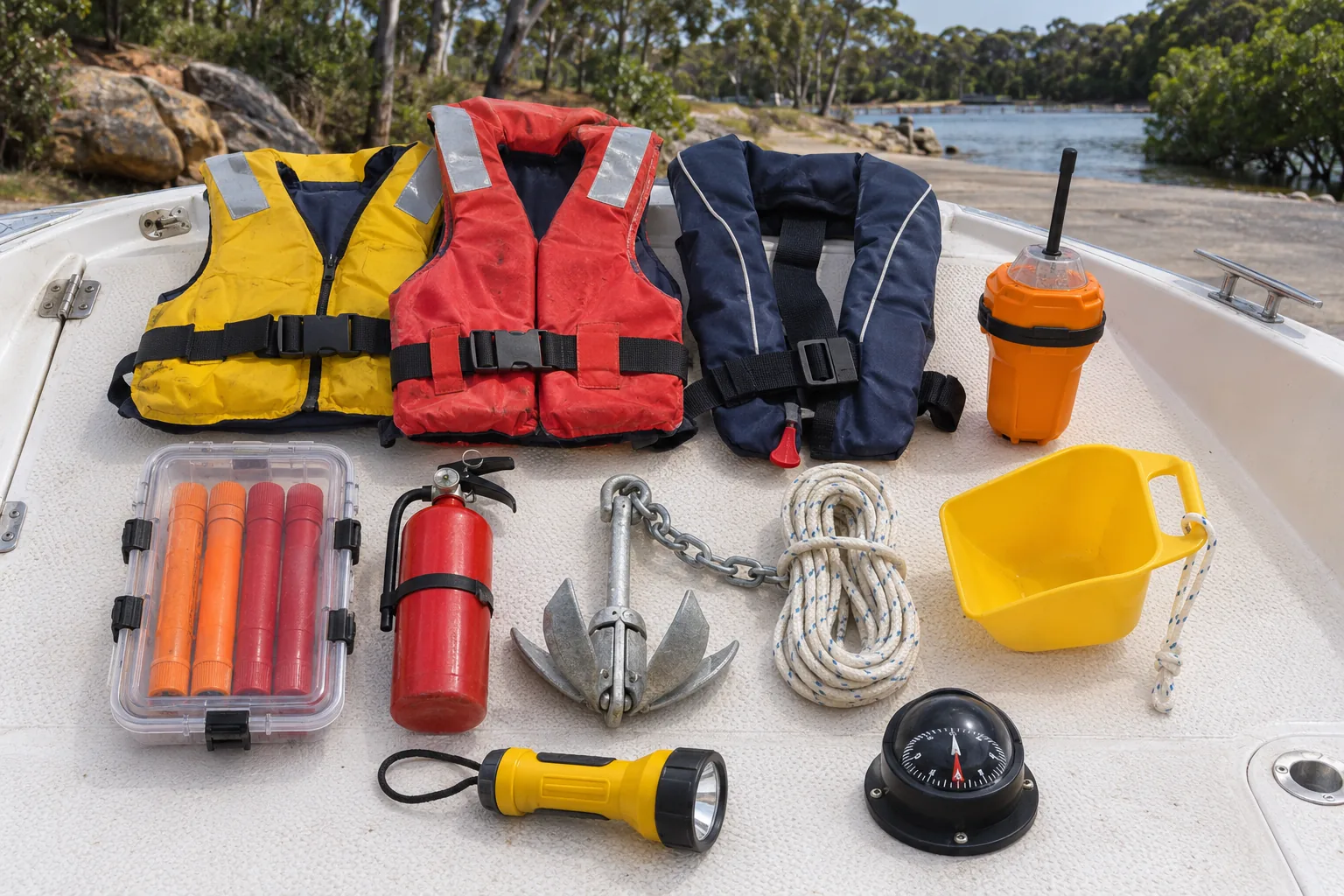
From Pittwater to a fishing spot off Barrenjoey
You have a 5.5-metre runabout with one electric-start outboard and four people aboard. It is not a tender. You plan to leave Pittwater for an open-water fishing spot 2.5 nautical miles from shore. The boat has covered bilges, a working pump and a PLB, but no EPIRB. Your phone has reception at the ramp.
Before you read the solution: what would you do?
True or false?
Decide each statement before you see the answer.
At exactly 2 nautical miles I can leave the EPIRB and radio ashore.
With covered bilges I can automatically leave the bucket at home.
My PLB and phone replace the EPIRB and radio.
Recommended extras help you deal with injury, breakdown and separation from the boat.
Expired flares count as long as I have four of them.
PWC, tenders and paddlecraft have specific equipment provisions.
The main checklist applies to ordinary powerboats and sailing boats, with stated exceptions.
Use the stricter open-water checklist threshold for both EPIRB and marine radio.
A bailer works by hand; pumps drain covered bilges and relevant underfloor compartments.
The sea is flat, so the enclosed-water kit will do offshore.
A first-aid kit is enough extra preparation; I can leave the lanyard loose.
On open waters, carry two orange smoke flares, two red hand flares and a V sheet.