Part DCritical
Rule 37: Distress signals
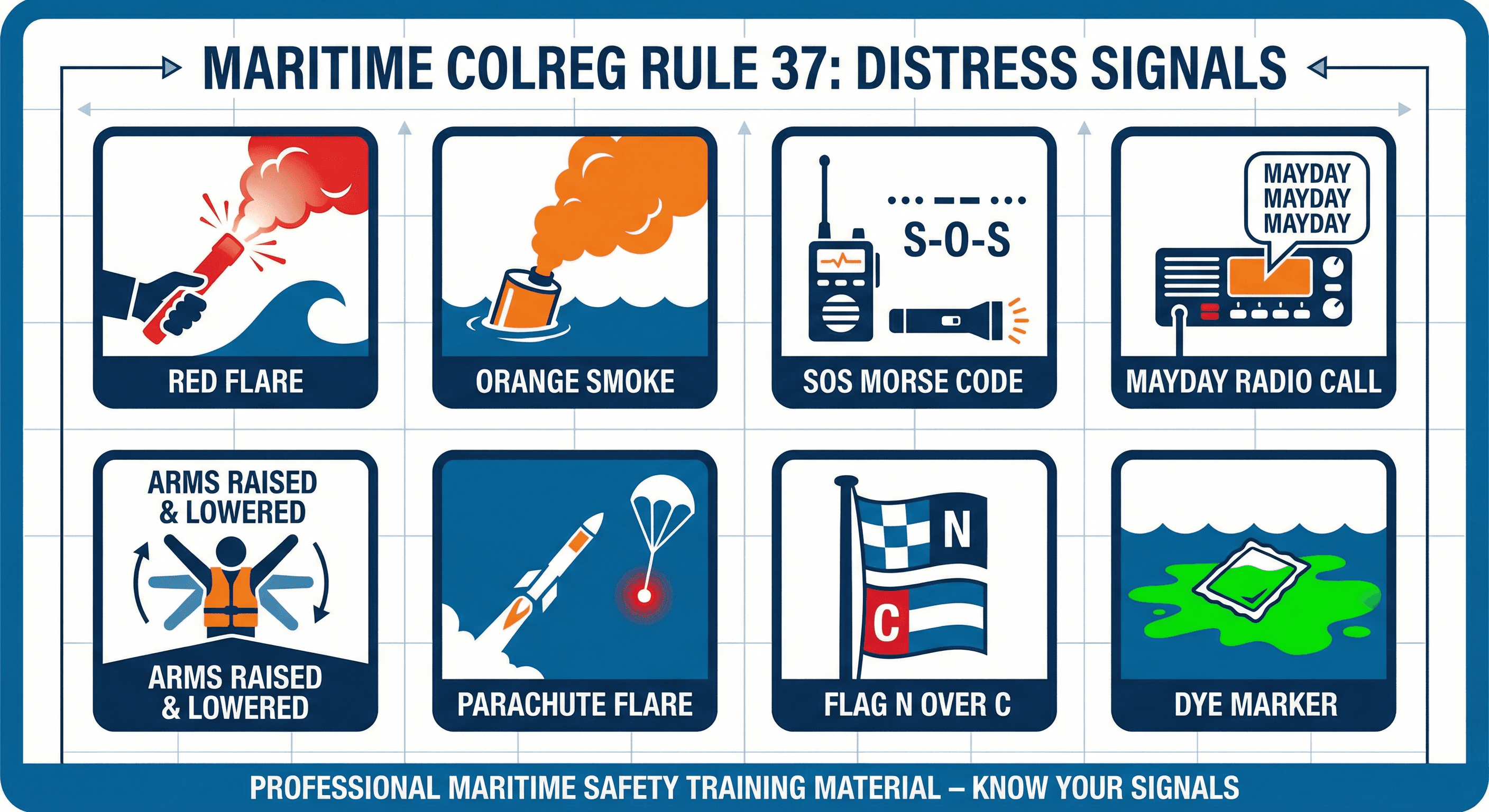
Distress and request for assistance must use Annex IV recognized signals.
Detailed Explanation
A vessel in distress and requiring assistance shall use/exhibit the signals described in Annex IV. For exams and real operations, know these signals and avoid misuse, because false distress signalling is prohibited.
Key Points
- Distress = grave and imminent danger requiring assistance
- Know all Annex IV signals (flares, SOS, MAYDAY, EPIRB)
- Never use distress signals unless in genuine distress
Examples
- A vessel fires red star rockets at regular intervals and transmits MAYDAY on VHF CH 16. These are recognized Annex IV distress signals under Rule 37, indicating grave and imminent danger.
- You see orange smoke and continuous sounding of a foghorn from a grounded vessel. Per Rule 37 and Annex IV, these are legitimate distress signals — you report to MRCC and proceed to assist if safe.
- A recreational boat fires red flares as a celebration. This constitutes misuse of distress signals prohibited by Rule 37 — Annex IV signals shall not be used except to indicate distress.
Common Mistakes
- Using distress signals to attract attention when the vessel is not in grave and imminent danger.
- Not knowing the full list of Annex IV signals and relying only on VHF MAYDAY.
- Confusing an urgency signal (PAN PAN) with a distress signal (MAYDAY) and deploying the wrong response.